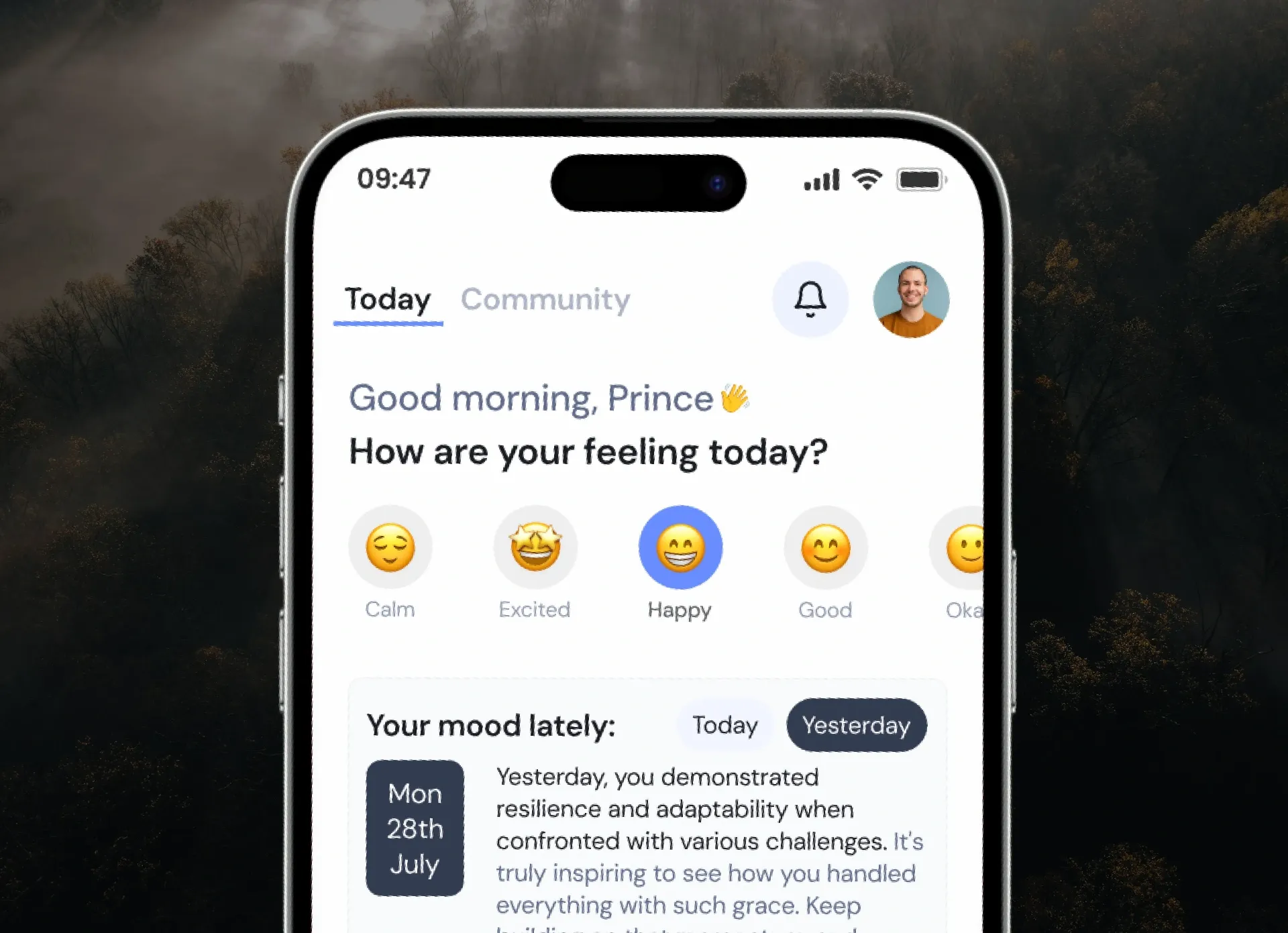
Help singers learn their part without hunting through YouTube, voice notes and WhatsApp.
Case study 04Music tech
Lagos, Nigeria
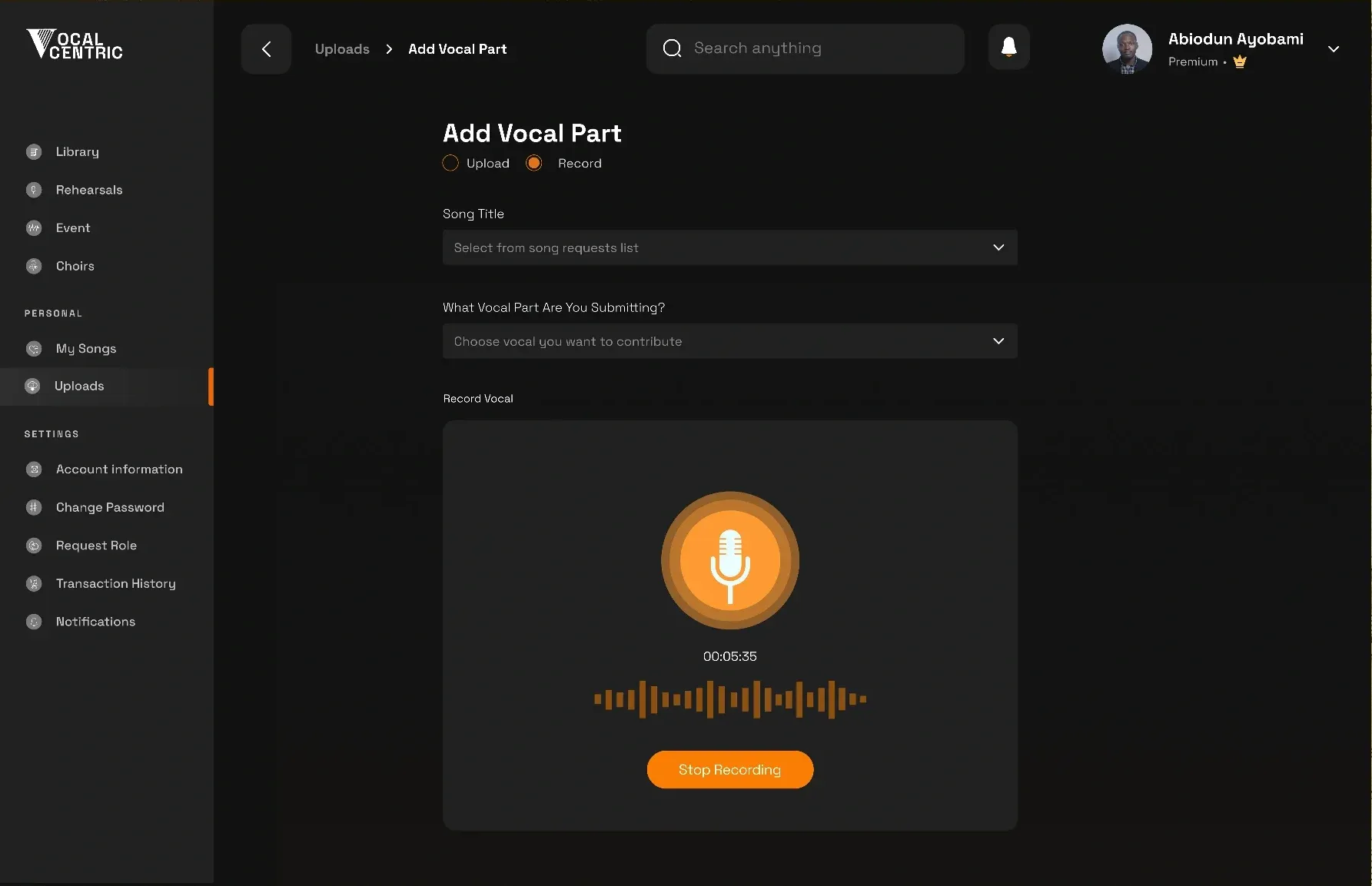
Vocal Centric is an AI tool for singers and choirs: upload a track, and it splits the vocals and maps alto, soprano, tenor and bass. I was one of three designers, across mobile, web and admin.
3 min read · 2023 to 2024
The 30-second version
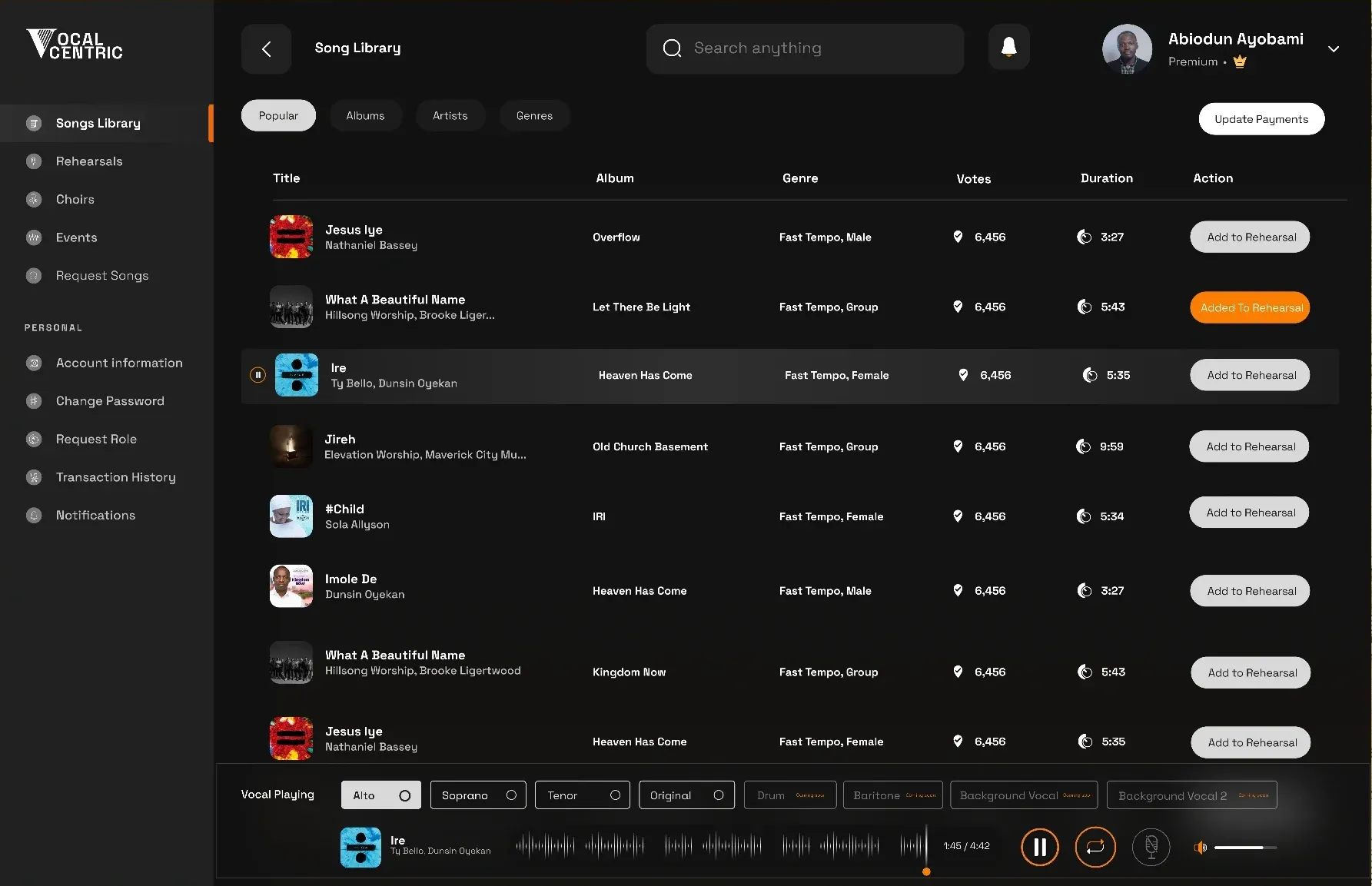
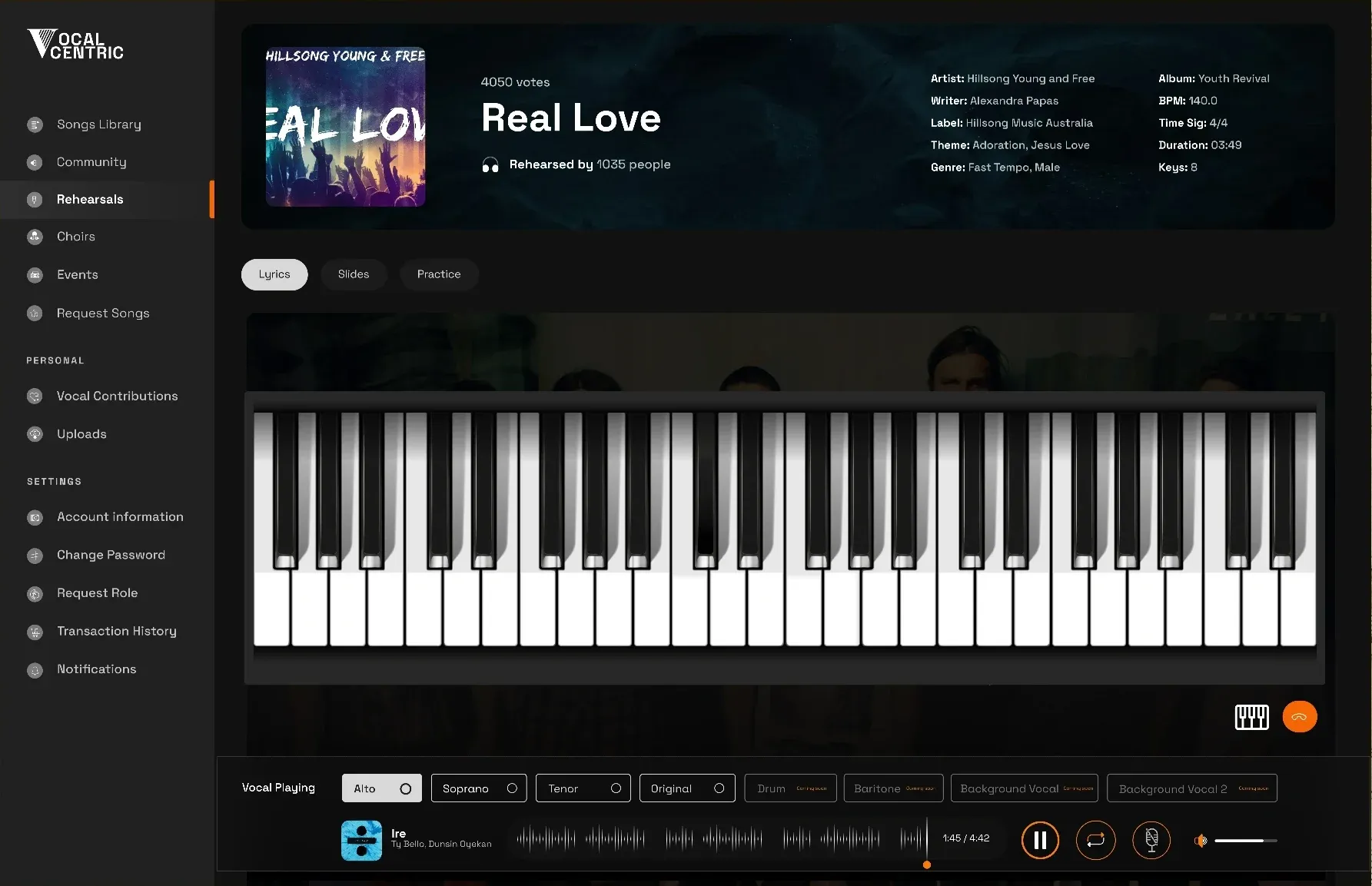
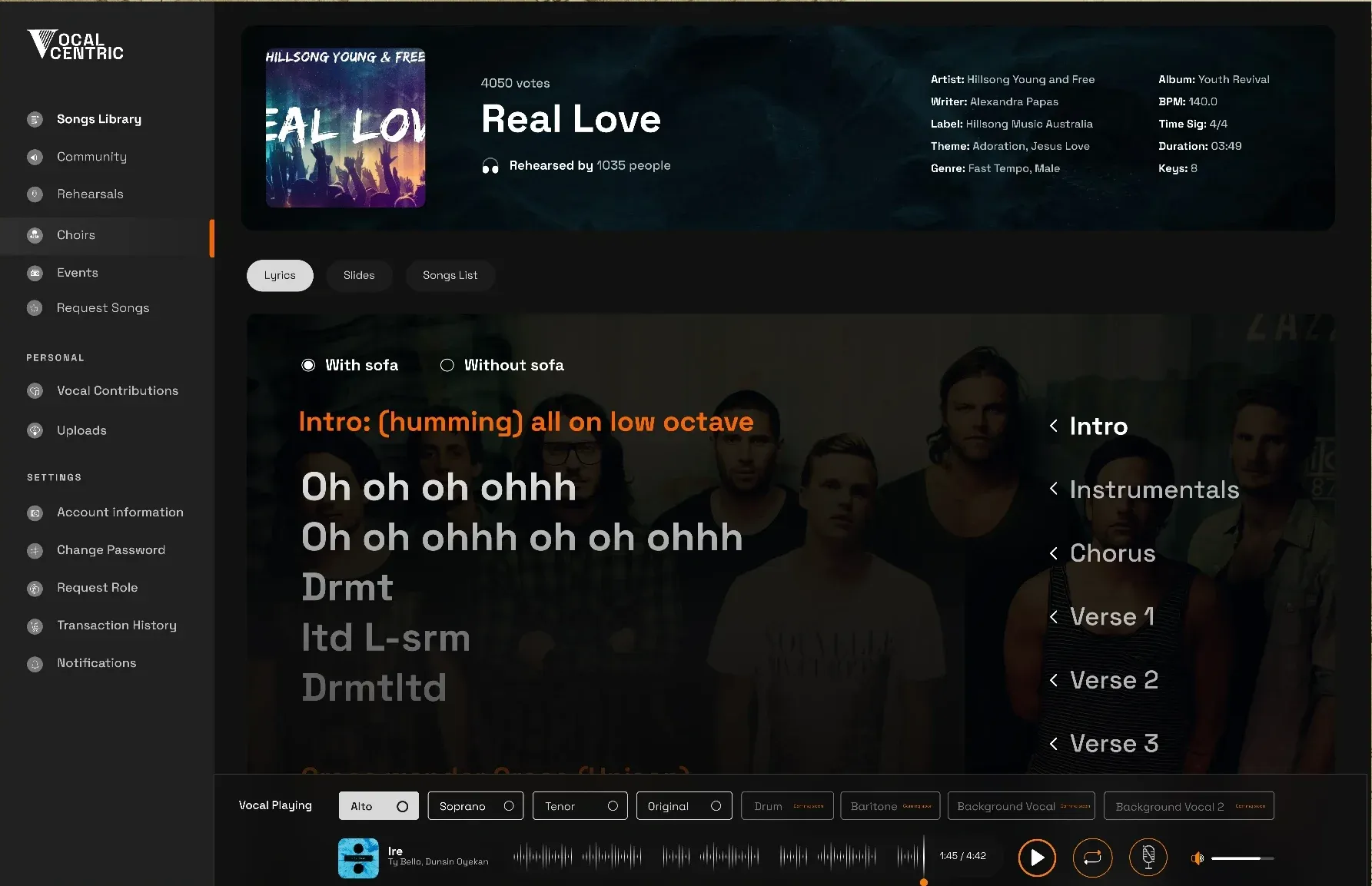
For busy readersDesigned a song library, part player, lyrics, practice tools and community, with the AI in the background.
Retention rose 25% and recording-and-editing time fell 40% in the first four months.
- 25%higher retention in four months
- 40%less recording and editing time
- 4vocal parts from any track
The music existed. Practising it was broken.
Someone had to work out by hand who sings which line, and feedback meant posting a recording in a WhatsApp group and hoping. Existing tools were built for audio engineers, not singers.
I learned enough music to design for musicians.
- 01 · research
Talked to singers, choir directors and vocal coaches.
- 02 · design
Worked on the library, player, lyrics, practice and community, and owned the admin side.
- 03 · accessibility
Checked everything against WCAG 2.1 AA, including keyboard and screen-reader tests.
Team: Me, designer David, another designer and a PM
Singers didn't need more music
AI helped where it removed grunt work, and annoyed where it replaced the singer.
- Insight 01
Hear just my part
Loop a single vocal part on demand.
- Insight 02
One library
Beats files scattered across chat threads.
- Insight 03
Quiet AI
Best in the background, never in the way.
The calls that shaped the product
Why the AI stays quiet
The first direction leaned on AI coaching feedback.
Shipped
The AI splits parts and maps ranges. You just hear your part.
Why the orange changed
Bright orange said "not another grey tool".
Shipped
Still lively, and passing WCAG 2.1 AA.
Designed for the moment mid-rehearsal
Core actions are never more than two taps away, and the community is a real space for discussions, requests and shared takes.
- Two taps to anything
- WCAG 2.1 AA
- AI framed around outcomes
From the first interview to launch
→ git log --releases
- 01ListenSingers, directors, coaches
- 02TryAI coach tested and dropped
- 03RebuildLibrary, player, community
- 04LaunchLive, then four months of data
✓ Live at vocalcentric.com.
Rehearsal moved into one app
- 25%higher retention in four months
- 40%less recording and editing time
- 4vocal parts from any track
Singers started looping each other's takes to lock in harmonies.
Showing capability vs earning trust
People need to trust AI output before they change how they practise, so the design gave the analysis room to prove itself.
- What I found interesting
Learning the difference between an alto and a mezzo-soprano, and why it matters to a singer.
- What was challenging
Keeping a bold, energetic palette while passing accessibility checks.
- A mistake I made
I prototyped the audio player too late. The real product lives in how play and loop feel mid-rehearsal.
- What I learned
Prototype the core interaction in week one, before the visuals.
Where it's at: Live at vocalcentric.com.
Next case study