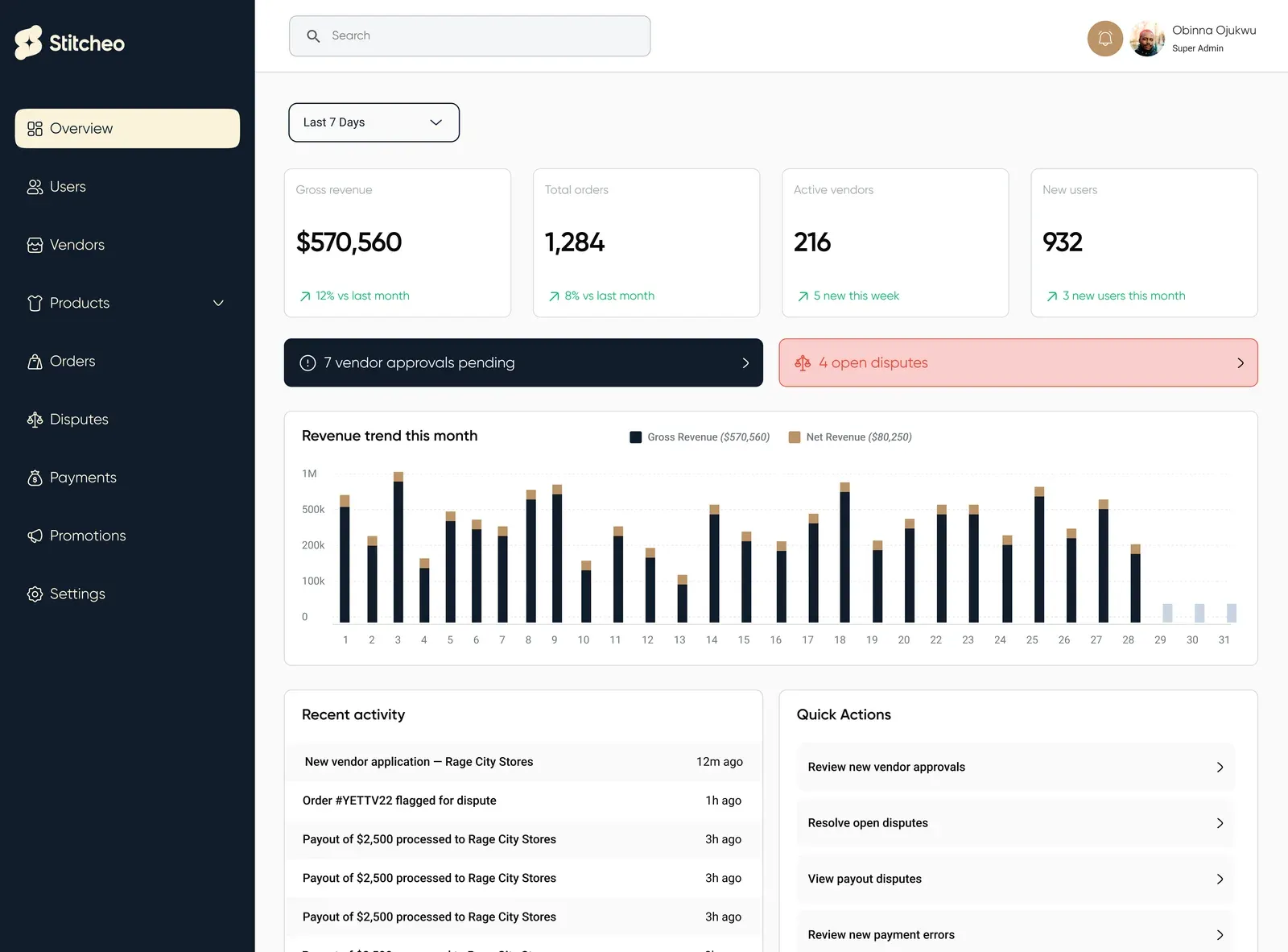
Give therapists the context they used to spend the start of a session rebuilding.
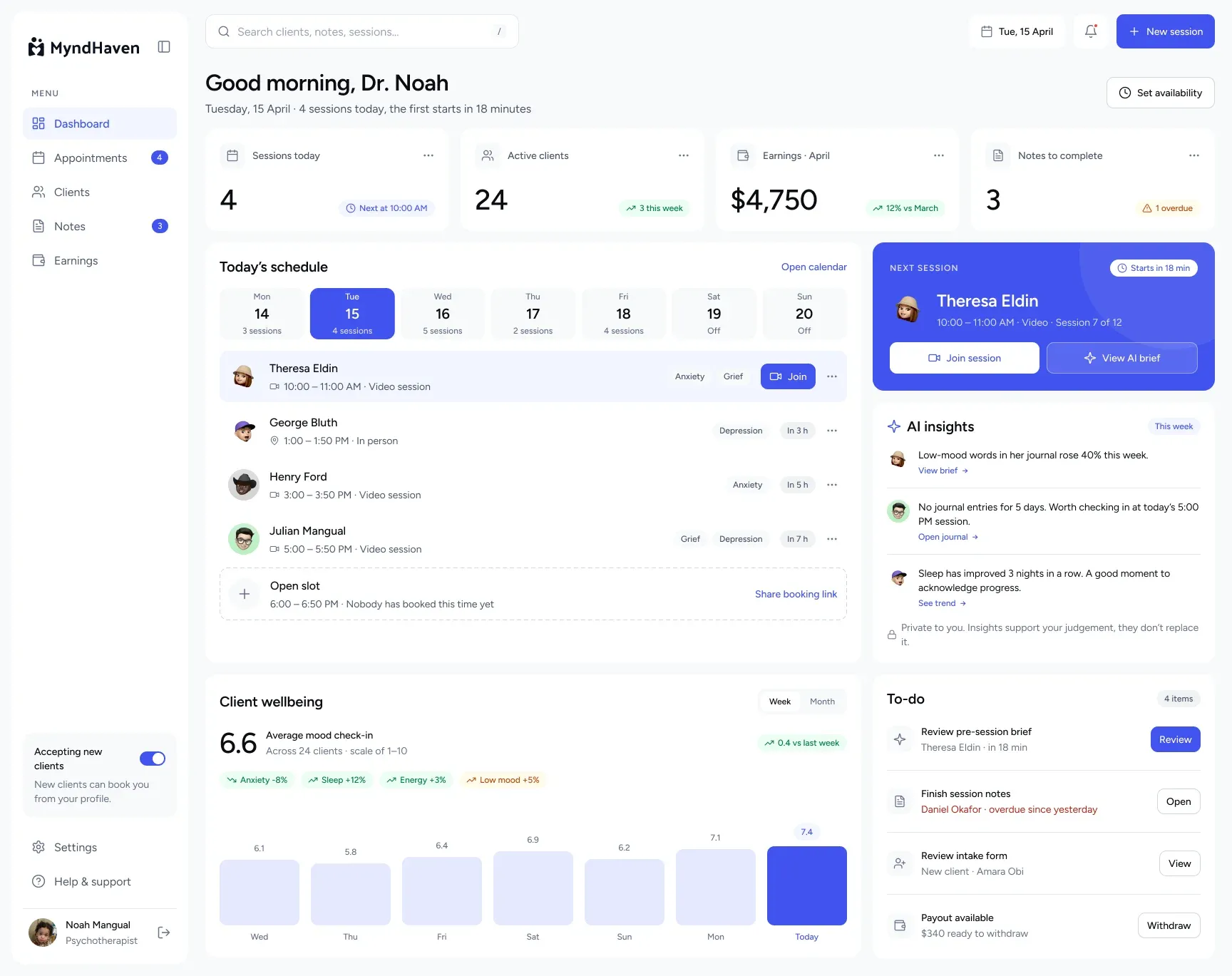
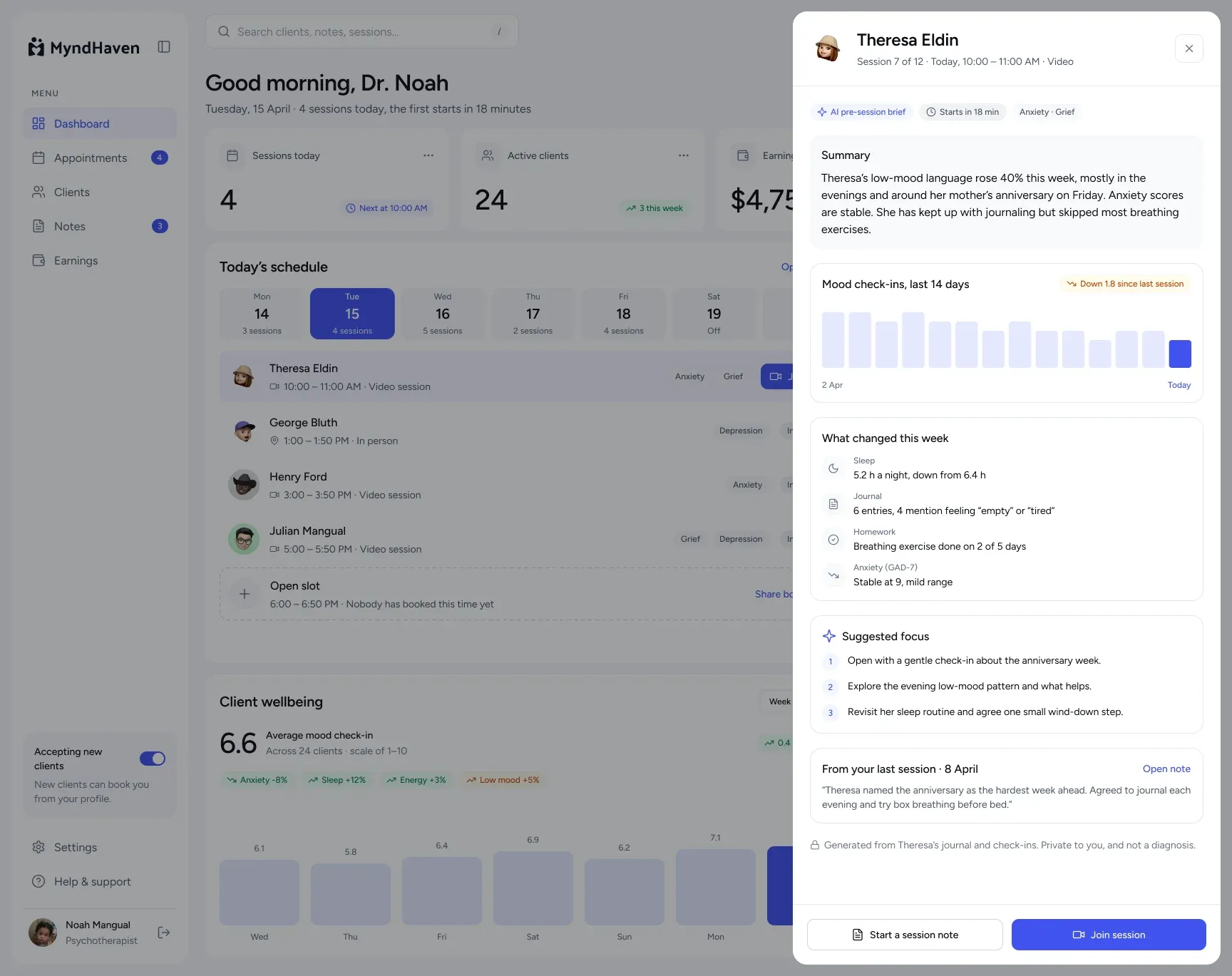
MyndBoard is MyndHaven's workspace for therapists. It turns what clients log between sessions into a brief before each session, then handles the calendar, the client record, the notes and the payouts around it. I designed it end to end, from sign-up to the last empty state.
3 min read · 2025 to now
The 30-second version
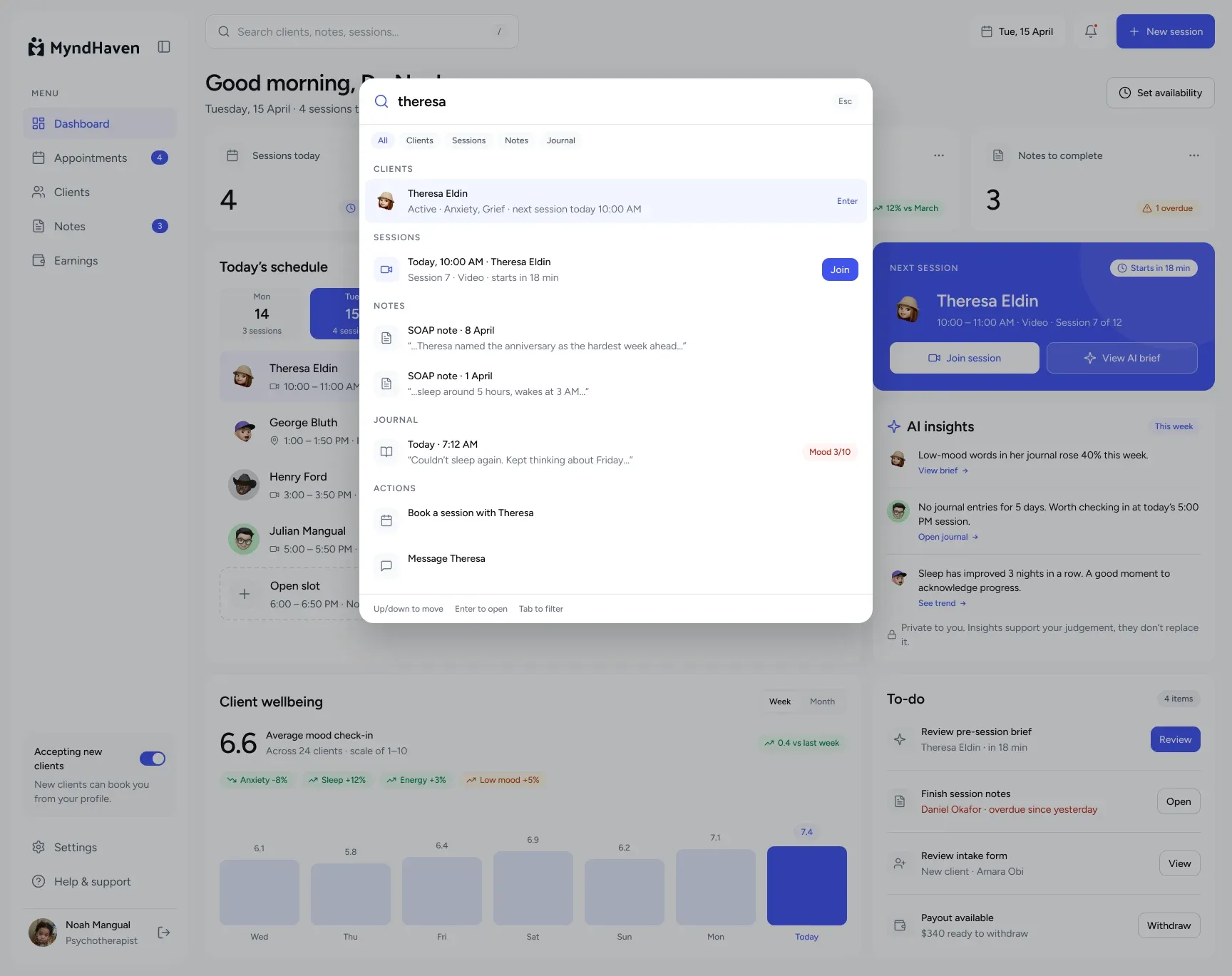
For busy readersDesigned a full therapist workspace: a daily dashboard, AI pre-session briefs, scheduling, client records and assessments, video sessions with drafted notes, and earnings.
97 screens across seven product areas, including the empty, error and offline states most projects skip.
- 97screens designed
- 7product areas, from briefs to payouts
- 6empty, error and offline states
Therapists start every session half blind.
Clients journal and check in on MyndHaven between sessions, but none of it reaches the therapist in a form they can use. Notes, scheduling and billing live in separate tools, and the admin spills into the evenings.
I designed the therapist side, end to end.
- 01 · map
Mapped a therapist's day: before, during and after each session, plus the admin around it.
- 02 · design
Designed the dashboard, briefs, appointments, client records, notes, video sessions, earnings and settings.
- 03 · states
Designed every empty, error, loading and offline state, and a mobile companion for between sessions.
Team: Me and three software engineers
What therapists needed from it
Three needs shaped the product, from interviews with therapists and our own team discussions.
- Insight 01
Read it in two minutes
A brief has to fit the gap between two sessions.
- Insight 02
Judgement stays theirs
AI can point things out. It must never diagnose.
- Insight 03
Give the evenings back
Notes and admin were eating the hours after work.
The calls that shaped the product
How much should the AI say?
It can read a client's whole week. Therapists have to trust what it tells them.
Shipped
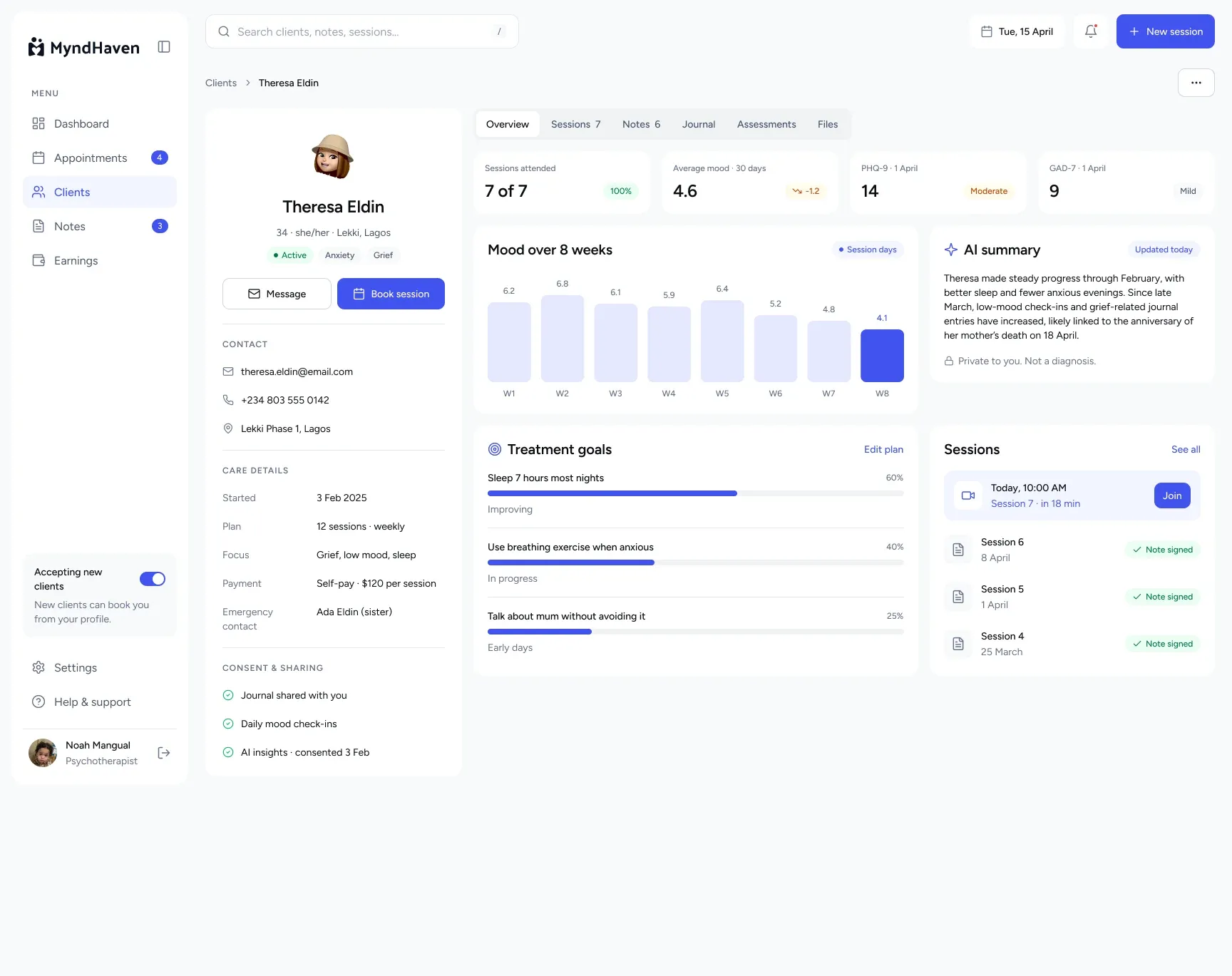
Each insight links to the journal entry or check-in behind it, and is labelled private and not a diagnosis.
Notes that sound like the therapist
Drafted notes only save time if nobody has to rewrite them.
Shipped
Therapists share a sample note so drafts match their voice, with a reminder to remove client details first.
Making risk impossible to miss
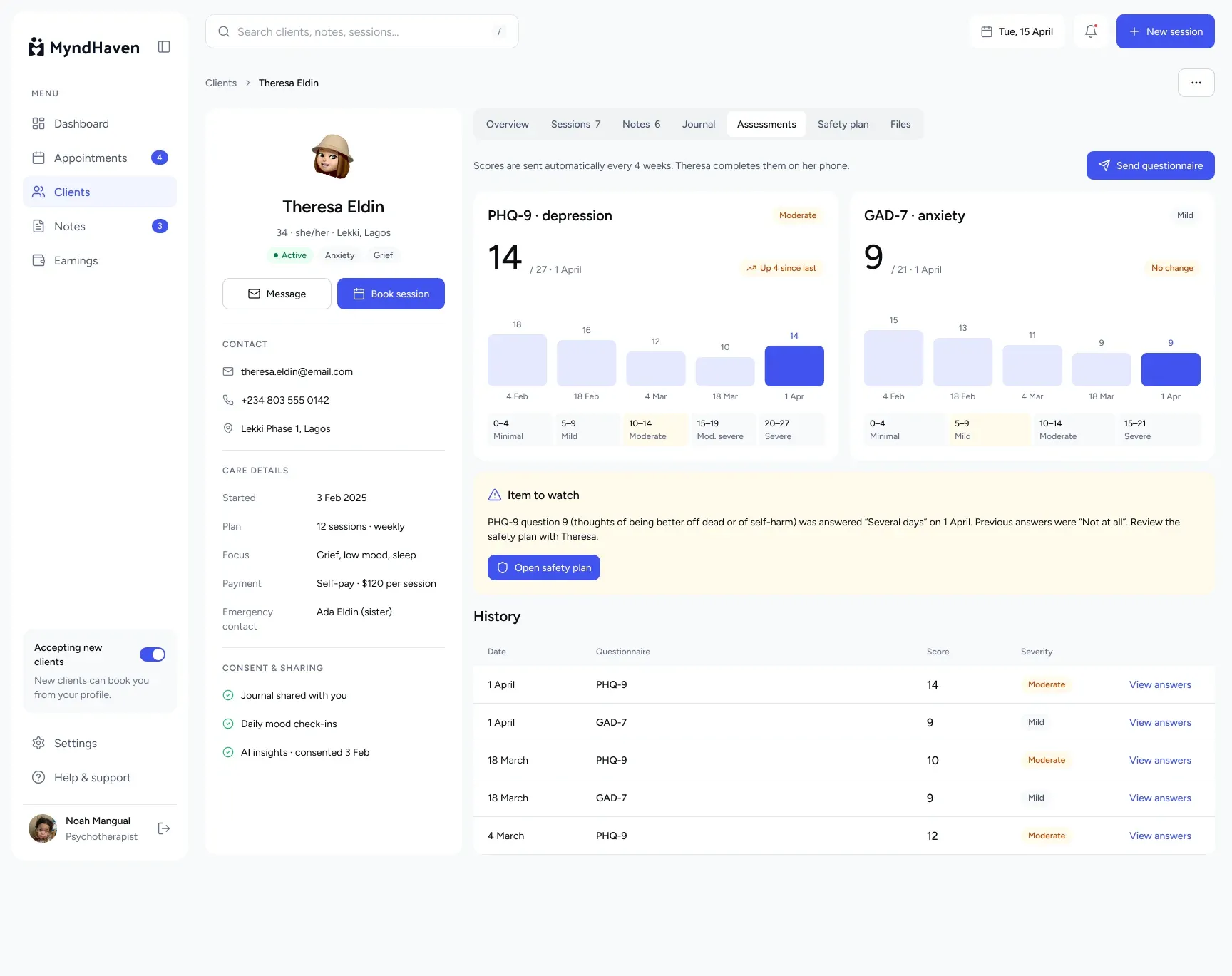
Questionnaire scores arrive every four weeks, and one answer can matter more than the total.
Shipped
A changed answer on self-harm becomes an item to watch, one tap from the safety plan.
A therapist's day, screen by screen
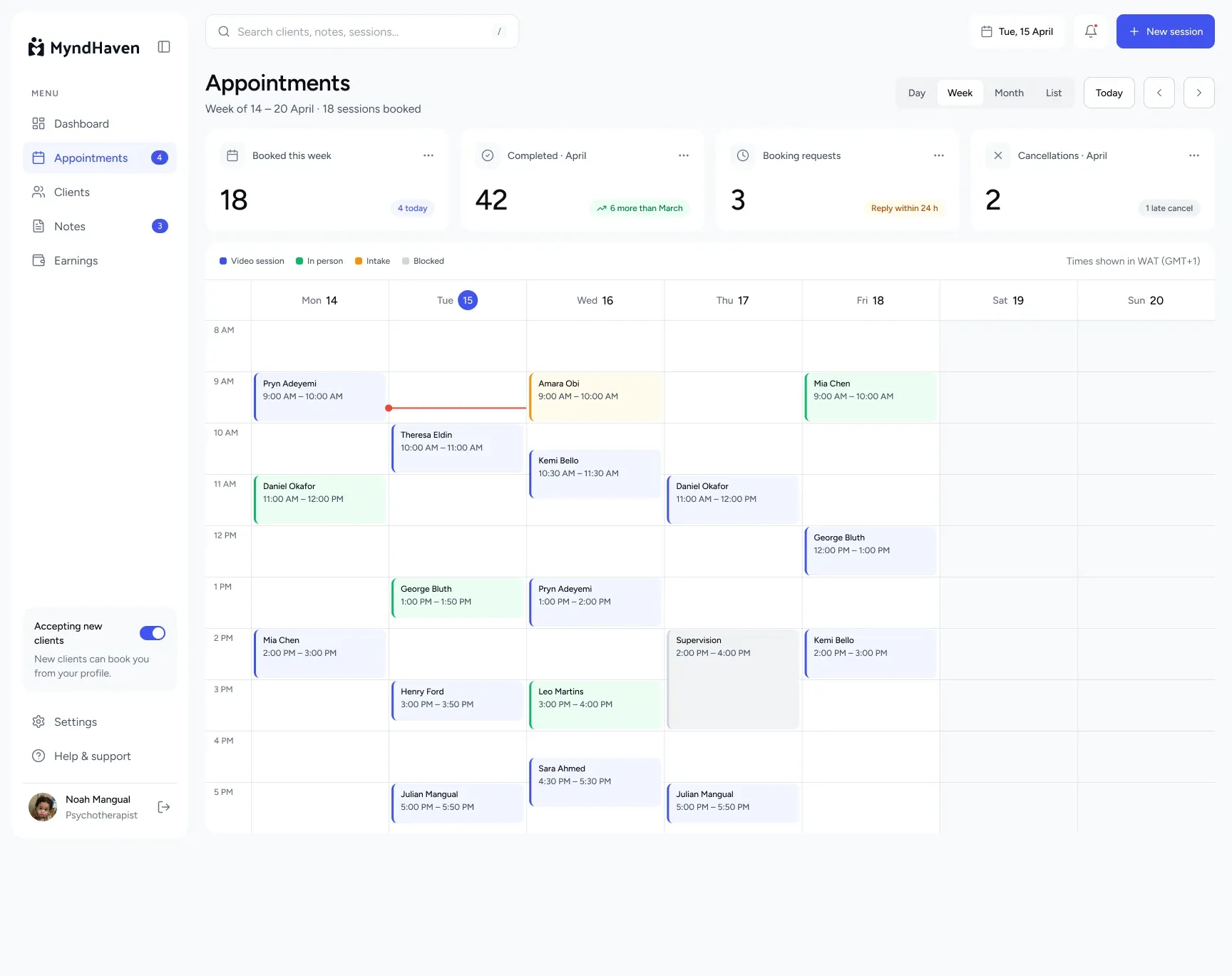
From the morning dashboard to the pre-session brief, the client record and the week ahead. Tap any screen to see it full size.
- Briefs, not data dumps
- AI that shows its sources
- Every state designed
From one brief to a whole workspace
→ git log --releases
- 01MapA therapist's whole day
- 02CoreBriefs, sessions and notes
- 03AdminCalendar, records and earnings
- 04StatesEmpty, error, offline, mobile
✓ Designed in Figma as the therapist side of MyndHaven, launching alongside it.
A complete workspace, ready to build
- 97screens designed
- 7product areas, from briefs to payouts
- 6empty, error and offline states
A therapist can open the day, read a brief in a couple of minutes, run the session and leave with a drafted note, all in one place.
What MyndBoard taught me
Designing AI for professionals is about trust: what it shows, what it leaves out and how it explains itself.
- What I found interesting
How much calmer the dashboard felt once every AI insight linked back to its source.
- What was challenging
Fitting a whole week of a client's life into a brief someone can read between sessions.
- A mistake I made
I designed the happy path first and left the empty and error states to the end, which meant reworking several layouts.
- What I learned
Design the first-day and worst-day states alongside the main screens, not after them.
Where it's at: Designed in Figma as the therapist side of MyndHaven, launching alongside it.
Next case study