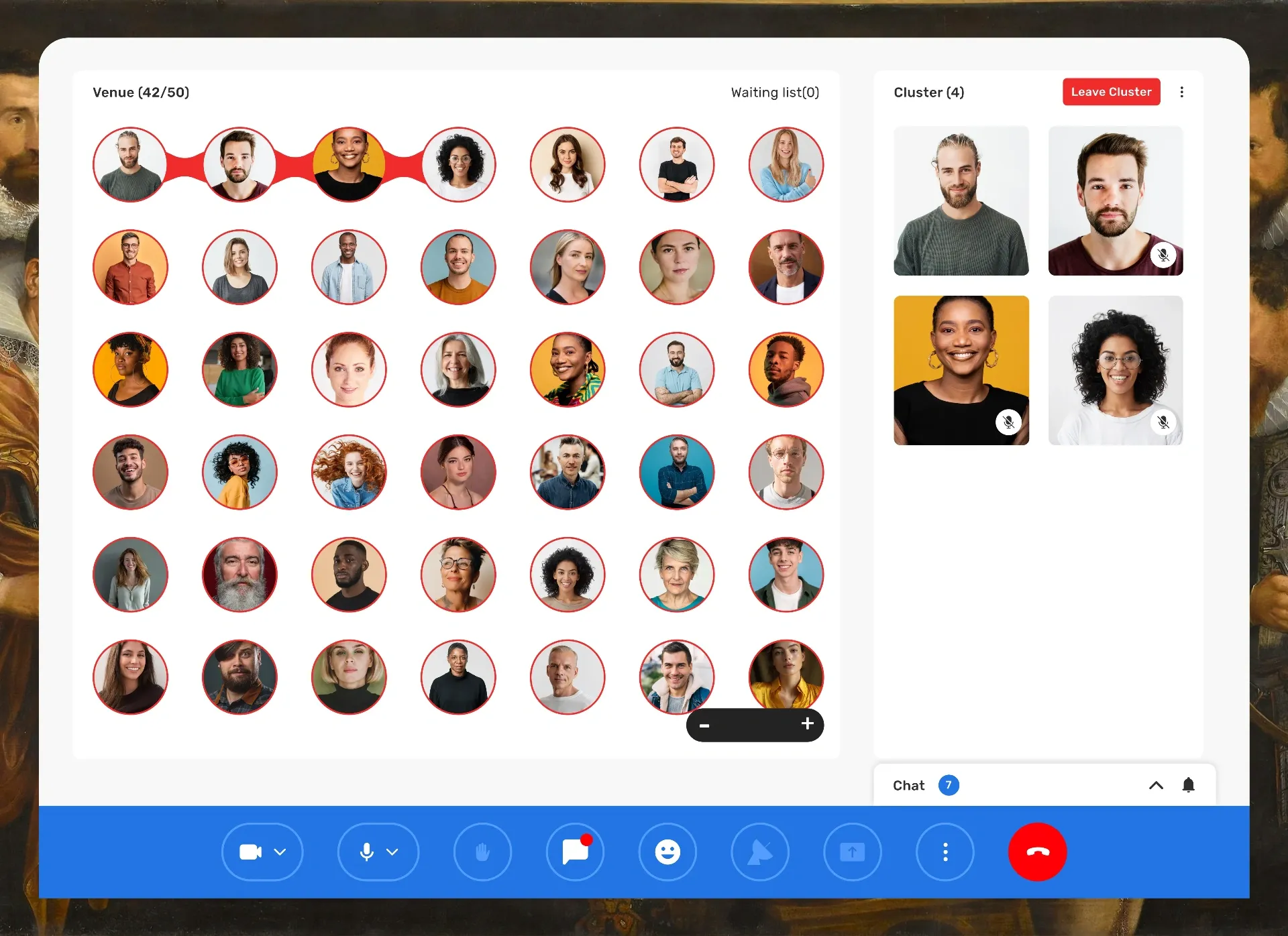
Replace notebooks and spreadsheets with a traceable record that buyers and payroll can trust.
Case study 02AgriTech
Rwanda
Imara Farms is a farm-management platform for commercial farms, cooperatives and agro-traders across Africa. With fellow designer Omotade, I designed the product from scratch.
3 min read · 2026
The 30-second version
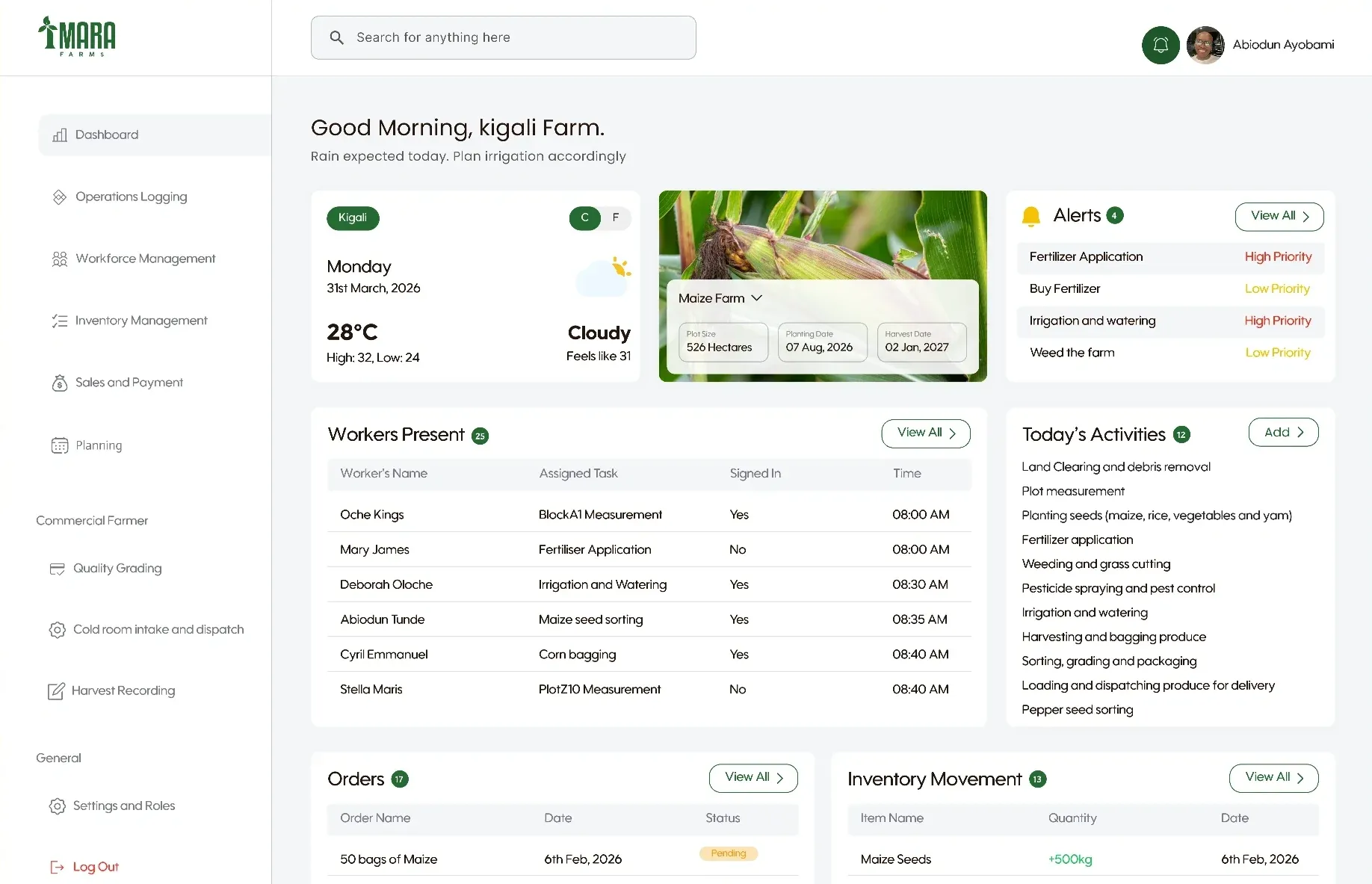
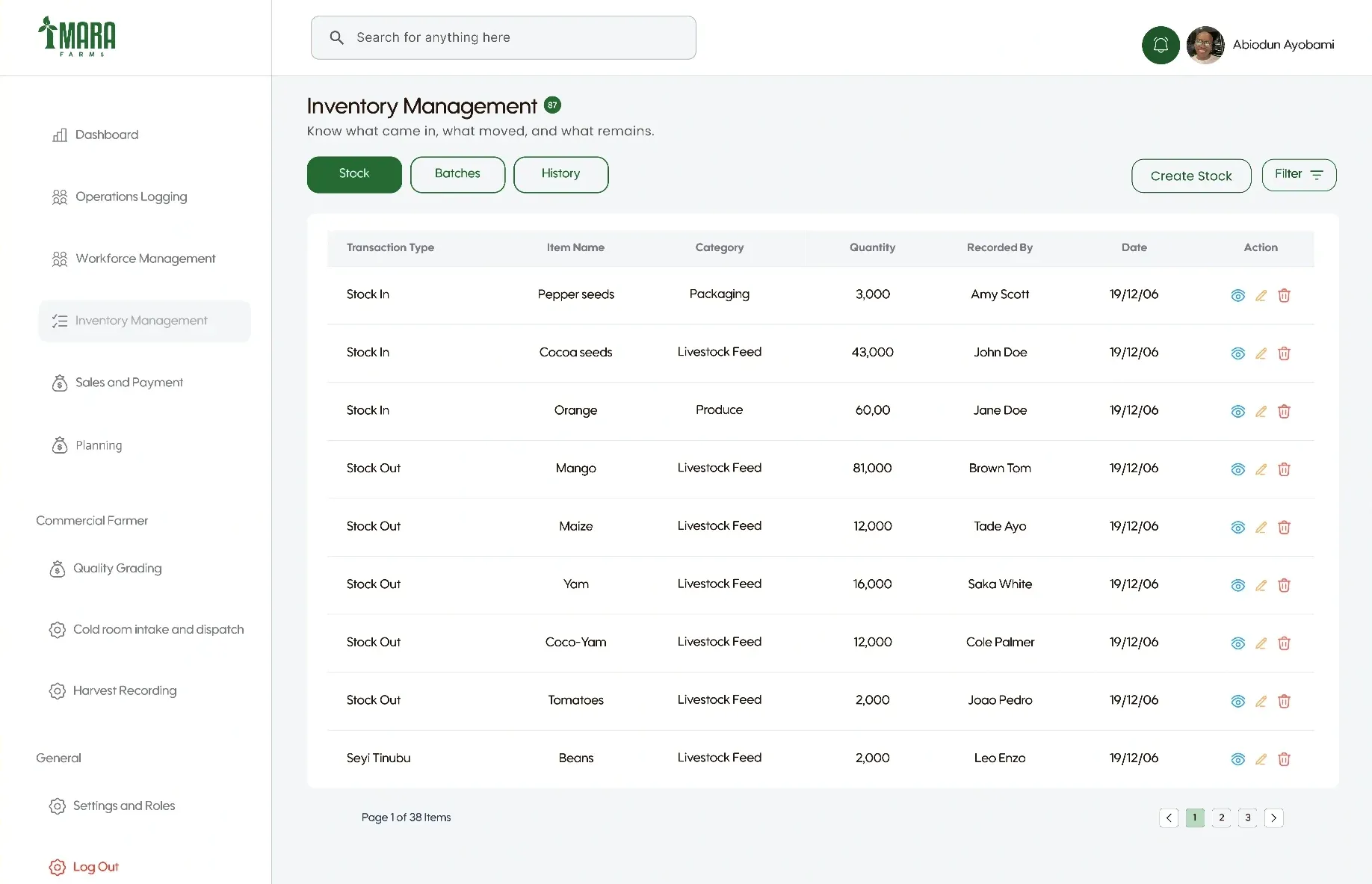
For busy readersMapped seven modules and three user types, then designed one platform that adapts to each.
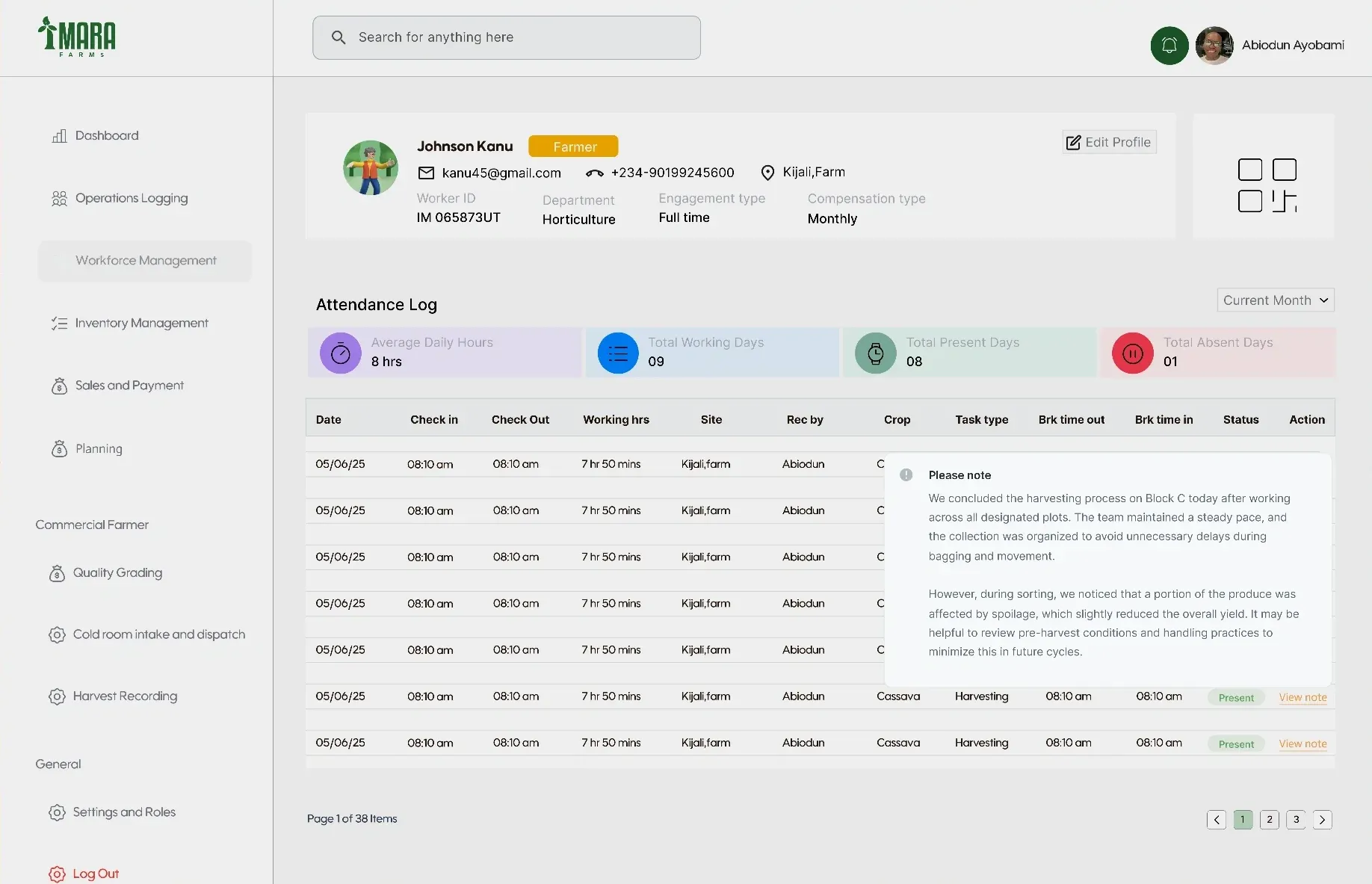
GPS-verified attendance, batch traceability and photo-proof grading, across 200+ screens.
- 3user types, one platform
- 7operational modules
- 200+screens designed
The numbers never matched, and nobody knew why
Attendance went from notebook to spreadsheet to payroll, and weeks later nothing added up. Export buyers wanted proof of where a batch came from, and handwritten pages cost farms the sale.
We designed the whole product, starting with the map.
- 01 · research
Mapped every module, user type and action before drawing a screen.
- 02 · design
Designed onboarding, dashboards and workflows for web and mobile.
- 03 · handoff
Delivered annotated Figma specs, components and edge-case states.
Team: Me and designer Omotade, with a PM and engineers
Three users, one database, different jobs
Each user type needed the same data for something else.
- Insight 01
The farm manager
Wants harvest numbers that match the cold room.
- Insight 02
The cooperative
Tracks 200 members and wants faster payments.
- Insight 03
The agro-trader
Needs batch tracking and documents EU buyers accept.
The calls that shaped the product
Onboarding asks who you are first
Most modules were irrelevant to any one user.
Shipped
Farms, cooperatives and traders each start in their own world.
Why grading needs a photo
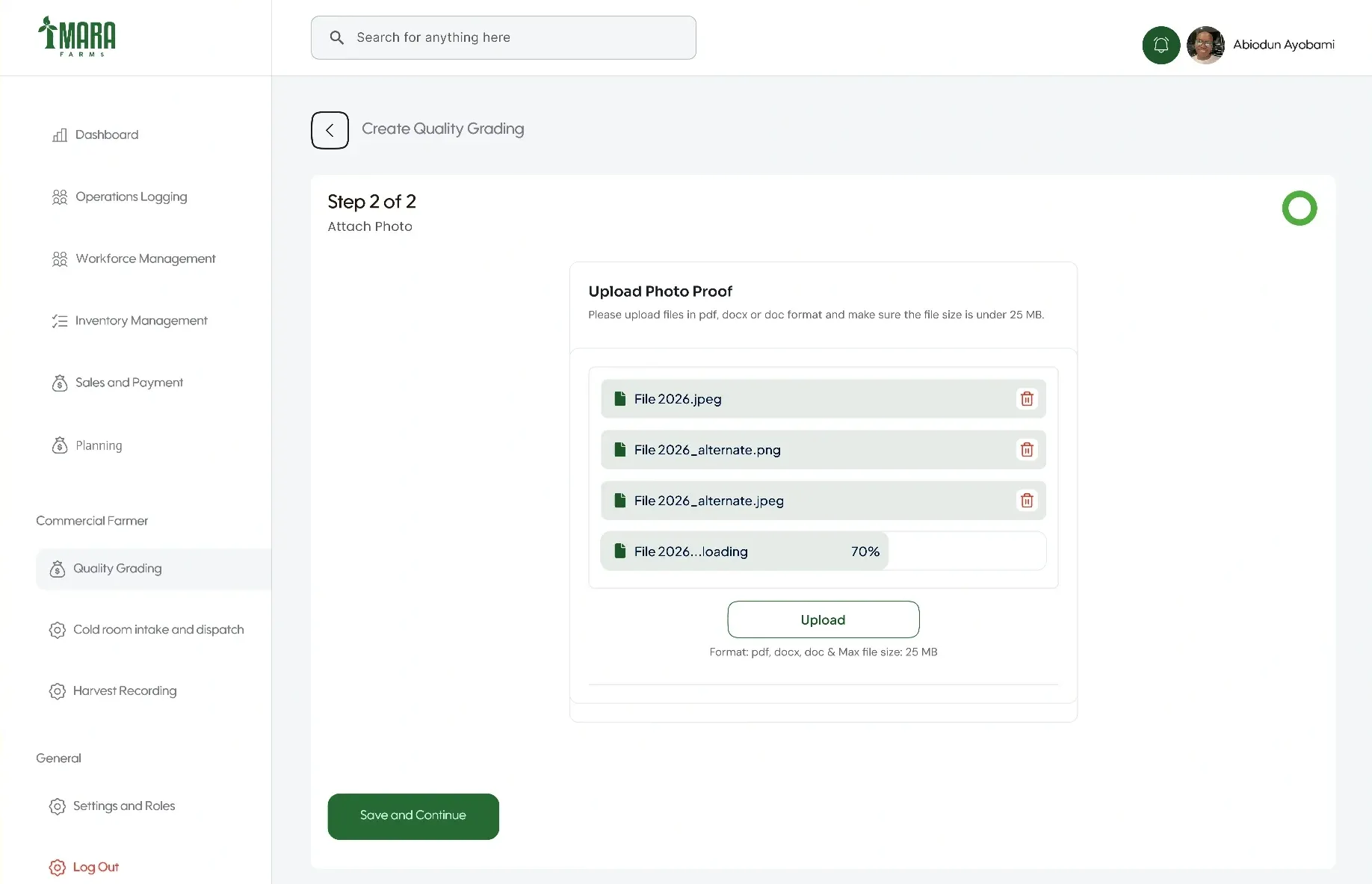
A grade decides what a batch is worth.
Shipped
A little extra work that opens premium markets.
The flow map became the most used thing we made
Field agents tap activity logs instead of writing them. Attendance is GPS-verified before payroll, and any batch traces from intake to dispatch in three taps.
- Modules mapped first
- GPS and photo proof
- Edge cases designed
From notebook to handoff
→ git log --releases
- 01MapEvery module on one map
- 02OnboardRole-aware setup
- 03CoreLogs, attendance and grading
- 04HandoffSpecs and components delivered
✓ Live at imarafarms.com.
A paper trail people can check
- 3user types, one platform
- 7operational modules
- 200+screens designed
Attendance is verified before payroll, and every batch can be traced with documents attached.
What farming taught me
Agriculture has more moving parts than most products. Once the vocabulary clicked, every screen had a reason.
- What I found interesting
Learning how plots, blocks, sites and seasons relate, and watching the architecture fall out of it.
- What was challenging
Keeping one product coherent for three users who want different things from the same data.
- A mistake I made
We showed the flow map to each user type too late. Earlier reviews would have caught gaps sooner.
- What I learned
Map the whole system before screen one. I start every complex product this way now.
Where it's at: Live at imarafarms.com.
Next case study